
Why Canadians Are Going Local: The Secure Marketplace Shift
Traditional classifieds are losing ground. Discover why safety-conscious Canadians are switching to secure local marketplaces with payment protection.

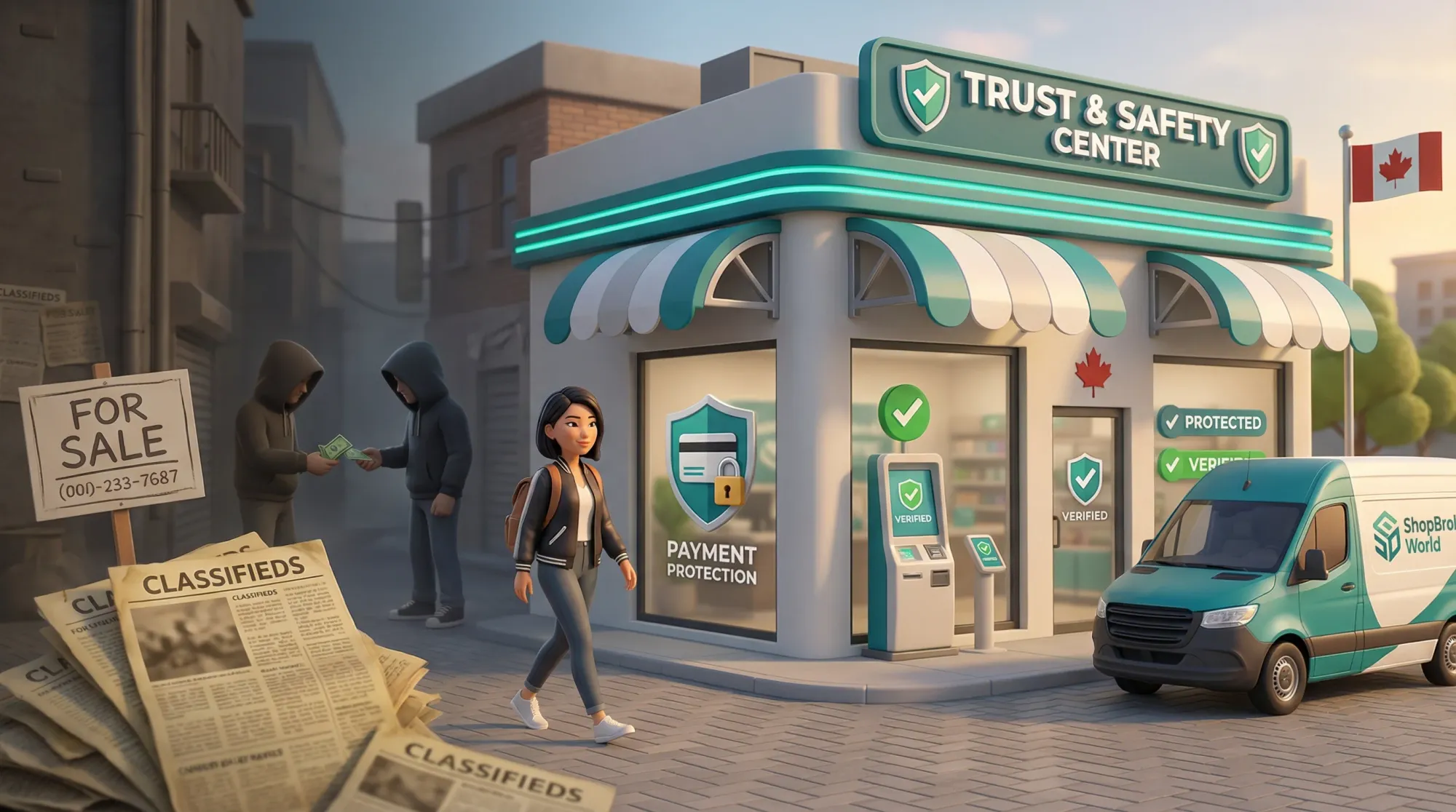
Something shifted in how Canadians buy and sell locally. The traditional classifieds model—list item, meet stranger, exchange cash—feels increasingly dated. A new expectation is emerging: local commerce should be both convenient and safe.
Here's what's driving this shift and why secure local marketplaces are becoming the new standard.
The Evolution of Local Commerce in Canada
From Newspapers to Digital
Local buying and selling has always existed. Newspaper classifieds. Community bulletin boards. Garage sales. The internet didn't create local commerce; it just moved it online.
First wave: Craigslist and Kijiji digitized the classified ad model. Same concept, bigger reach. But fundamentally the same experience: list, meet, hope for the best.
Second wave: Facebook Marketplace leveraged existing social connections. See the seller's profile, mutual friends, some sense of who you're dealing with. Better, but still meetups and cash.
Current wave: Secure marketplaces with built-in protection. Payment verified before meetup. Delivery options that eliminate strangers. Accountability systems that create trust.
The Problems with Traditional Classifieds
Let's be honest about what hasn't worked.
No Payment Protection
Traditional platforms facilitate contact between buyer and seller. They don't touch the money.
What this means:
- Fake payment confirmations work because there's no verification
- Sellers have no guarantee of payment until cash is in hand
- Buyers have no protection if items aren't as described
- Disputes have no resolution mechanism
Safety Concerns
Meeting strangers to exchange goods and cash creates inherent risk.
Real concerns:
- Parking lot meetups with unknown people
- Inviting strangers to your home
- Cash transactions without verification
- No accountability if something goes wrong
A 2024 survey found 67% of Canadians have safety concerns about traditional classified transactions. These aren't irrational fears.
No Recourse for Issues
When transactions go wrong on traditional platforms, you're on your own.
Common problems with no solution:
- Item doesn't match description
- Payment disputes after the fact
- Scams with no accountability
- Quality disagreements
Seller Accountability Gaps
Anyone can list anything with no verification of who they are or whether they're legitimate.
Accountability issues:
- No identity verification
- Reviews don't transfer between platforms
- Easy to create new accounts after problems
- No pattern recognition for bad actors
What Secure Marketplaces Offer
The new generation of local commerce platforms addresses these gaps.
Payment Protection as Standard
Modern platforms handle money, not just connections.
How protection works:
- Buyer's payment is authorized and secured before any item changes hands
- Funds aren't released until transaction completes successfully
- Disputes have a resolution mechanism
- Neither party is exposed to payment fraud
Verified Delivery Options
Eliminating stranger meetups removes the primary safety concern.
Delivery benefits:
- Professional couriers, not random people
- Real-time tracking
- Item inspection before acceptance
- No address exposure to buyers
Seller Ratings and Reviews
Accountability systems create incentives for good behavior.
Reputation effects:
- Poor experiences get documented
- Good sellers build trust over time
- Buyers can make informed choices
- Patterns of problems become visible
Privacy Features
Personal information stays protected.
Privacy protections:
- Names displayed partially (John D.)
- Phone numbers not required
- Addresses shared only with assigned drivers
- Communication stays on platform
The Safety-First Shift
Why are Canadians increasingly expecting these features?
Changing Buyer Expectations
People who shop on Amazon expect certain standards: payment protection, delivery tracking, return policies. Those expectations carry over to all commerce.
Particular Concerns Among Women and Families
Safety concerns aren't evenly distributed. Women selling alone, families with children, elderly sellers—all have heightened awareness of meetup risks.
Marketplace demographics:
Platforms offering delivery and payment protection see significantly higher participation from these groups who would otherwise avoid traditional classifieds.
Post-Pandemic Comfort with Delivery
COVID-19 normalized delivery for everything. Groceries, restaurant meals, everyday purchases. Local marketplace delivery feels like a natural extension.
Trust as the Differentiator
In a crowded space, trust becomes the distinguishing feature. Platforms that can demonstrate genuine protection win users tired of crossing their fingers.
Convenience as Expectation
Safety drove the initial shift. Convenience accelerated it.
No Coordination Required
Traditional classifieds require back-and-forth to arrange meetups. Location negotiations. Time coordination. Confirmation texts.
Secure platforms handle logistics. Set availability once. System matches buyers and delivery. No scheduling headaches.
Professional Delivery
Instead of leaving work early to meet someone in a parking lot, items arrive during scheduled windows with real-time tracking.
Mobile-First Experience
Modern platforms are designed for phones, not desktop browsers. List from wherever you are. Respond to inquiries immediately. Track transactions in your pocket.
Time Savings
The hours spent coordinating meetups, waiting for no-shows, and traveling to exchange points add up. Delivery-focused platforms return that time to sellers.
The Canadian Context
Several factors make Canada particularly suited for this shift.
Winter Weather
For half the year, parking lot meetups mean standing in the cold. Indoor meetup spots are limited. Delivery eliminates weather as a factor.
Urban Density
Major Canadian cities have population density that supports efficient local delivery networks. The infrastructure for same-day and next-day delivery exists.
Improving Delivery Infrastructure
Delivery services have expanded rapidly. Driver availability has increased. The logistics of local delivery are increasingly reliable.
Environmental Consciousness
Canadian buyers increasingly consider the environmental impact of their purchases. Local commerce has inherent sustainability advantages over shipped goods, and secondhand extends item lifecycles.
What This Means for Sellers
The shift creates both opportunity and expectation.
Higher Buyer Trust = Faster Sales
When buyers know transactions are protected, they commit faster. No hesitation about whether payment will work or items will match descriptions.
Payment Protection = Less Risk
Verified payments before item release eliminates the uncertainty of traditional transactions. No more wondering if e-transfers will bounce.
Professional Appearance
Selling on a secure platform signals legitimacy. Buyers perceive sellers differently when they operate within protection systems.
Community Building
Reputation systems create accountability that builds community. Regular sellers develop recognizable presence. Trust accumulates.
Frequently Asked Questions
Do secure marketplaces cost more than traditional classifieds?
Can I still meet buyers in person on secure platforms?
How do secure platforms prevent scams?
What happens if something goes wrong?
Are all my items suitable for secure marketplaces?
The Future Is Secure and Local
The shift from traditional classifieds to secure local marketplaces isn't a trend. It's an evolution in expectations. Once people experience protected transactions and delivery options, going back feels like unnecessary risk.
Local commerce continues. The way it happens is changing.
Ready to try it? Create your first listing with payment protection and delivery options built in.